Data Reveals Where Buyers Click First in Digital Advertising
 Digital advertising changes every day. The spots where buyers click first often tell more about them than companies expect. Knowing exactly where attention lands right away can shape how small businesses spend their marketing dollars. But getting this right feels like a puzzle, with buyers acting like they want to hide their true intentions. What if the secret lies not in what people say, but where their clicks go?
You might have tweaked your ads, guessed at the best spots for buttons or images, and still gotten disappointing results. That feeling that your digital advertising strategy is a bit like throwing darts in a dark room can be exhausting and confusing. It’s tough when every click or no-click weighs heavily on a tight budget and small team. Luckily, data about those first clicks exists, offering honest clues instead of guesswork.
This article digs into real insights about where buyers place their first clicks online, what myths have muddied this picture, and how you can rethink your setup to respect how people really behave. There’s more to this than just picking hot colors or moving a button an inch. The answers might surprise you.
What You Really Need to Know About Buyer Behavior and Clicks
- Small business owners often guess which part of their digital ads grabs attention first without solid data backing it up.
- Where buyers click first affects everything from spending to customer experience and long-term loyalty.
- Many believe flashy designs or pop-ups snag the initial click, but data shows people are picky and almost sneaky with their first moves.
- Focusing on where buyers click first can boost ad performance and save money from wasted impressions.
- The truth is some common design “rules” don’t hold water when tested against actual click behaviors.
- Adjusting your digital advertising strategy based on click data is about testing, not just instinct.
Where Buyers Aim Their First Click and Why It Matters More Than You Think
Starting with the basics, it’s easy to assume buyers go straight for a big flashy ad or a bright red button. Data shakes this up a bit. People often click on areas that look trustworthy or familiar before anything eye-catching. For many, the first click is a quiet one—maybe a link that confirms “yeah, this business actually has what I need” instead of the loudest pitch.
A study once tracked clicks across hundreds of ads and found that nearly half of first clicks landed on product images or links embedded in descriptive text, not on “Buy Now” buttons. That hits as unexpected until you remember how cautious folks are these days about online scams and wasted time. They poke around the safe spots before pulling the trigger on a purchase.
Small business owners frequently overlook these spots. Instead, they cram offers and discounts near the bottom or shove important info into cluttered sides. The first click reveals a road people prefer to stroll before racing towards checkout.
It’s like heading to a local diner in Texas where instead of yanking the front door open, many tap the menu board outside or peek in the window first. Understanding that simple choice changes how you set out your digital storefront.
Crushing Common Myths About Digital Advertising and Click Behavior
People often buy into the idea that visitors to a website instantly click on the most obvious call to action. If you believe that, your ad or website might look like a crowded amusement park, yelling for attention. But real click data often shows buyers don’t always follow the neon lights.
Instead, many bounce around spots that add details or confirm trust before settling in. So the myth that you need to shout the loudest online is busted. What matters more is the order people check and the subtle navigation that leads them to commit.
Think about your own web surfing habits. You rarely click the biggest banner ad first, do you? Maybe you look for customer reviews, prices, or return policies hidden in menus. A lot of times people click to find out if you’re the real deal. That shapes where you put honest and upfront info on digital ads.
Another false belief: bigger means better for buttons. The truth is, oversized buttons look like over-eager roadside billboards and can actually put people off. Data shows that buttons sized just right and placed near where people spend their first moments get more genuine clicks.
It’s human nature to be skeptical, and your buyers act the same way online.
What Small Businesses Can Actually Do with These Click Insights
Knowing where buyers place their first clicks turns a random ad roll into an informed, thoughtful process. To start, try shifting important links to product images, headline areas, or near social proof rather than relying only on “Buy Now” buttons. Let people do their quiet fact-checking clicks before asking for a big commitment.
Here’s a small list that can guide you as you rearrange:
- Put clickable product images front and center with clear descriptions.
- Include customer ratings or a mini testimonial close to that first click zone.
- Test different button sizes and placements without adding noise nearby.
- Move important links away from distracting pop-ups or unrelated offers.
- Track your ad clicks with simple tools to see where they land first without guessing.
Let’s say you run a bakery in Los Angeles. You highlight your “Best Seller” cupcakes in a way that people can click the image and learn about ingredients or allergen info before ordering. Suddenly, the first click becomes a conversation, not just a transaction.
In many ways, changing where your ad invites first clicks feels like learning to whisper in a room full of shouters.
Breaking Down Where Clicks Happen and Why on Web Pages
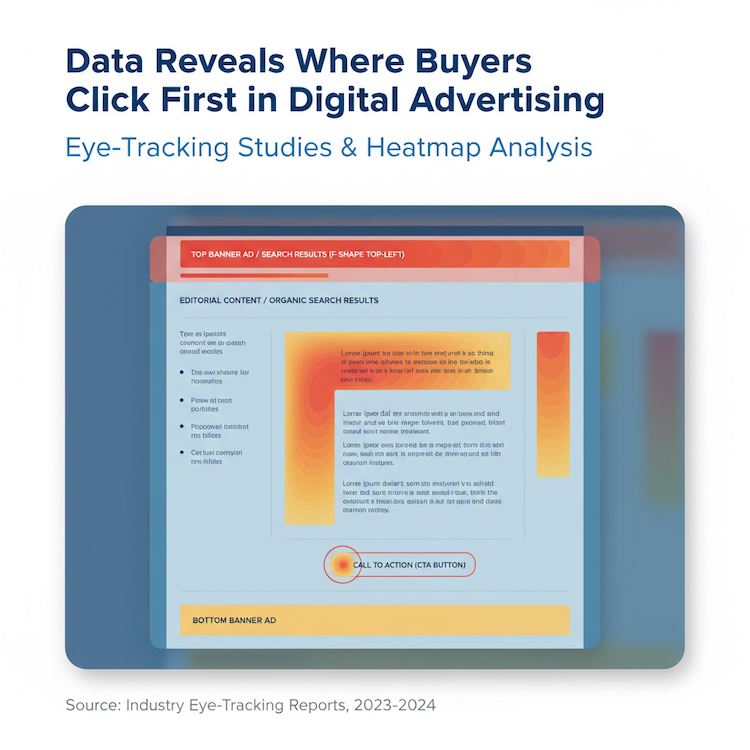
Understanding the anatomy of the visitor’s mouse journey helps decode click locations. Most people start at the top left corner because they read left to right. Yet the exact focus within that space varies. A headline grabbing interest gets some clicks, but people also click around images or navigation menus nearby.
Heatmaps from multiple case studies in 2023 confirm these findings consistently. The top right tends to get fewer first clicks despite being a common spot for ads or login buttons. This might be because people expect action buttons near the text they read or images they check out.
Clicks also cluster near trustworthy cues like security badges or contact info on pages. If you want the first move from a buyer, lay out those cues where eyes naturally rest. What helps small business owners is realizing that this read pattern isn’t random but follows a kind of road map built from years of online habits.
When you think about it, every website is like a street fair in New Orleans’ French Quarter, where the vendors eager for your dollar don’t want to blare from across the street but carefully catch your eye from a shady porch.
What’s True About Digital Advertising and Where Clicks Go First
When it comes to digital advertising itself, people rarely click on big banner ads above the fold anymore. Instead, they click on native ads, content that looks like part of the website, or organic links in descriptions that promise genuine answers.
Small businesses that solely display big banners miss the potential of where buyers want to click first. Ads blending with other content or that provide easy next steps in text get more initial interest.
Here’s a quick glimpse comparing ad types and expected first-click behavior:
| Ad Type | Where First Click Usually Lands | Why It Works |
| Banner Ads | Bottom edge or off main content | People often avoid these |
| Native Ads | Within article text or images | Feels less pushy, more natural |
| Text Ads | On headline or link embedded words | Provides direct info |
| Video Ads | On player controls or thumbnails | Curiosity triggers the click |
This matters because small businesses often focus on banner volume, but the data points to blending in with content to catch that first click better.
What you keep in mind during your digital advertising campaign can change the kind of clicks you get from visitors. People pick paths slower than a cat watching a laser pointer. Paying attention to where they step first is key.
Pulling It All Together and Why Your First Click Counts
Looking over these insights, it seems clear that digital advertising has more layers than just flashy pictures or giant buttons. Buyers pick their first click in small moments that matter. They lean toward spots that feel familiar, safe, and informative.
Small business owners tweaking their ads can start thinking less about the shout and more about the whisper. Adjusting where your clickable spots live on the page is like tuning a guitar. If it is off, the music will disappoint. But when you match your audience’s expectations and habits, you build a rhythm that pulls in clicks naturally.
Knowing exactly where buyers click first means better use of your advertising budget, fewer wasted impressions, and smoother, more honest conversations with potential customers.
Where the Clicks Take You: Spotting What Really Matters in Digital Advertising
- Buyers prefer clicking on clear images and trustworthy info first, not just bold buttons.
- Big flashy ads get ignored more than people realize.
- First clicks often lead to quiet fact-finding, not immediate buying.
- Placing honest, clickable info near those key spots can improve click rates.
- Testing and watching your click data regularly beats guesswork hands down.
- You’re not chasing the loudest noise, but the softest glance that turns into action.
If this article sparked questions or you want support figuring out where your buyers really click first, it’s worth talking to someone who lives and breathes this stuff.
Contact Us anytime to get help tuning your digital advertising game and feel confident about what your next click means.
Where The Community Comes to Roost!